


 Canada
 Meilleure vente
 Toutes les imprimantes
 Tous les assistants personnels (PDA)
 Toutes les étiquettes thermiques
L'expédition est l'un des aspects les plus cruciaux, mais souvent négligés, de la gestion d'une entreprise en ligne au Canada. Que vous vendiez sur eBay.ca, Amazon.ca, Shopify, ou via votre propre site web, savoir comment créer correctement une étiquette d'expédition peut vous faire économiser du temps, de l'argent et éviter des problèmes avec les clients. Ce guide vous accompagne tout au long du processus, couvrant les principaux transporteurs canadiens et des solutions pratiques pour rationaliser votre flux de travail d'expédition.
Pourquoi les étiquettes d'expédition sont plus importantes que vous ne le pensez
Une étiquette d'expédition correctement réalisée fait plus que transporter un colis d'un point A à un point B. C'est votre preuve légale d'affranchissement, un mécanisme de suivi pour votre client et une documentation pour les demandes d'assurance en cas de problème. Une erreur peut entraîner des colis perdus, des litiges et nuire à votre réputation de vendeur.
La bonne nouvelle ? Créer une étiquette d'expédition est simple une fois que vous en comprenez les bases. Décomposons le processus.
Comprendre le contenu d'une étiquette d'expédition canadienne
Avant de plonger dans le "comment", couvrons le "quoi". Chaque étiquette d'expédition au Canada nécessite des informations spécifiques :
- Informations de l'expéditeur : Nom de votre entreprise, adresse de retour, numéro de téléphone et e-mail
- Informations du destinataire : Nom du client, adresse complète, ville, province, code postal
- Type de service : S'il s'agit de Postes Canada Standard, Prioritaire, Accéléré ou d'un autre niveau de service
- Poids et dimensions : Essentiels pour le calcul des frais d'affranchissement et de manutention (système métrique et impérial)
- Code-barres et numéro de suivi : Générés automatiquement par le transporteur
- Coût d'affranchissement : Le coût d'expédition de l'origine à la destination
- Confirmation de livraison : Exigences de signature ou instructions de manipulation spéciales
- Considérations relatives à la TPS/TVH : Le cas échéant pour votre entreprise
- Déclarations transfrontalières : En cas d'expédition aux États-Unis ou à l'international
Les différents transporteurs canadiens (Postes Canada, Purolator, UPS Canada, FedEx Canada) ont des exigences d'étiquetage légèrement différentes, mais ces éléments de base restent cohérents.
Comment créer une étiquette d'expédition étape par étape
Étape 1 : Rassemblez vos informations d'expédition
Commencez par rassembler tout ce dont vous avez besoin avant de créer l'étiquette :
- Dimensions du colis (longueur, largeur, hauteur en centimètres ou en pouces)
- Poids du colis (en kilogrammes ou en livres)
- Adresse complète du destinataire au Canada (vérifiée et formatée correctement)
- Votre adresse de retour
- Préférence de niveau de service (Standard, Prioritaire, Accéléré, etc.)
- Code postal (si l'expédition a lieu au Canada)
Conseil de pro : Les colis mal adressés sont une cause majeure de problèmes de livraison. Vérifiez toujours deux fois l'adresse du destinataire, en particulier les numéros d'appartement/unité, les noms de rue et les codes postaux. Les codes postaux canadiens suivent le format A1A 1A1 ; assurez-vous d'un espacement et d'un formatage corrects pour un tri efficace.
Étape 2 : Choisissez votre transporteur
Le choix de votre transporteur dépend de plusieurs facteurs :
Postes Canada
- Idéal pour : Petits à moyens colis, expédition économique, couverture nationale
- Options d'étiquettes d'expédition : Postes Canada en ligne, Mon Centre Courrier, ou intégrations tierces
- Services : Colis standard, Colis accéléré, Courrier prioritaire et Xpresspost disponibles
- Poids maximal : 30 kg pour les services intérieurs
- Couverture : Couverture nationale, y compris les régions éloignées et rurales
- Suivi : Tous les services incluent un suivi de base ; confirmation de signature disponible
Purolator
- Idéal pour : Livraison rapide, entreprise à entreprise, tarifs compétitifs
- Options d'étiquettes d'expédition : Purolator.com, compte en ligne ou intégrations tierces
- Services : Options Sol, Express U.S., Express International et Overnight
- Couverture : Excellente couverture métropolitaine ; bon service régional
- Poids maximal : 68 kg (150 lb) pour les services standard
- Signature : Disponible sur tous les services pour une sécurité supplémentaire
UPS Canada
- Idéal pour : Expédition transfrontalière vers les États-Unis, suivi fiable, comptes professionnels
- Options d'étiquettes d'expédition : UPS.com, UPS CampusShip ou plateformes intégrées aux transporteurs
- Services : Sol, 3-Day Select, 2nd Day Air, Next Day Air
- Caractéristiques spéciales : Tarifs transfrontaliers compétitifs, capacités de suivi avancées
- Limites de poids : Varie selon le service ; généralement jusqu'à 70 kg par colis
- Assurance : Disponible pour les articles de grande valeur
FedEx Canada
- Idéal pour : Expédition internationale, délais de livraison garantis, services premium
- Options d'étiquettes d'expédition : FedEx.com, FedEx Ship Manager ou intégrations tierces
- Services : Sol, Express Overnight, Priority Overnight, options internationales
- Couverture : Nationale avec un accent sur les zones métropolitaines
- Limites de poids : Jusqu'à 68 kg par colis pour la plupart des services
- Services spécialisés : Expédition de matières dangereuses, options à température contrôlée disponibles
Loomis (DHL/Loomis)
- Idéal pour : Expédition régionale, livraison de colis à travers le Canada
- Options d'étiquettes d'expédition : Loomis.com ou intégration avec les plateformes de vente
- Services : Options de colis et LTL (Less Than Truckload)
- Couverture : Forte présence régionale à travers le Canada
- Tarifs compétitifs : Particulièrement compétitifs pour certaines régions
Intégration eBay.ca et Amazon.ca
- Idéal pour : Les vendeurs utilisant exclusivement ces plateformes
- Avantage : Récupère automatiquement l'adresse du client et s'intègre aux commandes
- Options d'expédition : Intégration de Postes Canada avec des tarifs réduits sur eBay.ca
- Limitation : Des exigences spécifiques à la plateforme et des restrictions de transporteur s'appliquent
- Remarque : Les deux plateformes offrent diverses solutions d'expédition adaptées aux vendeurs canadiens
Étape 3 : Créez votre étiquette en ligne
La plupart des transporteurs canadiens exigent désormais la création d'étiquettes en ligne. Voici le processus général :
- Connectez-vous au site web de votre transporteur ou utilisez une plateforme de gestion des expéditions tierce
- Saisissez ou confirmez l'adresse du destinataire (y compris le code postal et la province)
- Spécifiez votre adresse de retour
- Saisissez le poids du colis (en kg ou lb) et les dimensions (en cm ou pouces)
- Sélectionnez le service d'expédition et la vitesse de livraison
- Examinez le coût d'affranchissement
- Achetez l'affranchissement et générez l'étiquette
- Téléchargez et imprimez l'étiquette
Étape 4 : Imprimez votre étiquette correctement
L'impression d'étiquettes est plus technique qu'il n'y paraît. Voici les considérations critiques :
Qualité d'impression
- Utilisez une imprimante de haute qualité pour la reproduction la plus nette des codes-barres
- Évitez les imprimantes à jet d'encre si possible ; elles peuvent tacher et créer des codes-barres illisibles
- Imprimez à 100 % de l'échelle — ne jamais réduire ni agrandir l'étiquette
- Assurez-vous que les paramètres de votre imprimante sont corrects pour les formats de papier nord-américains (8,5" x 11")
Placement de l'étiquette
- Postes Canada préfère les étiquettes dans le coin supérieur droit ou supérieur gauche des colis
- Les étiquettes Purolator doivent être placées sur la surface la plus grande et la plus plate
- Les étiquettes UPS doivent être visibles et dégagées
- Les étiquettes FedEx nécessitent un placement spécifique sur la face la plus grande du colis
- Ne placez jamais d'étiquettes sur du ruban adhésif, des plis ou des autocollants existants
- Assurez-vous que le code-barres est entièrement visible — les colis ne peuvent pas être traités si les codes-barres sont illisibles
- Évitez de placer les étiquettes sur les coins ou les bords où elles pourraient être endommagées
Type d'étiquette
- Utilisez du papier pour étiquettes d'expédition approprié ou des étiquettes adhésives
- Le papier nord-américain standard de 8,5" x 11" fonctionne pour la plupart des transporteurs
- Un matériau d'étiquette de haute qualité empêche le décollement pendant le transport
- Envisagez des étiquettes résistantes aux intempéries pour les colis qui pourraient être exposés à l'humidité ou au froid
- Pour l'expédition hivernale, utilisez des étiquettes qui ne deviendront pas cassantes par temps froid
Rationalisation de votre flux de travail d'étiquetage d'expédition

Si vous expédiez plusieurs colis par semaine, la création manuelle d'étiquettes devient un goulot d'étranglement. C'est là que les solutions d'étiquetage d'expédition spécialisées entrent en jeu.
Pourquoi envisager des options d'étiquetage d'expédition dédiées
Pour les entreprises traitant un volume important, l'impression d'étiquettes d'expédition avec un système dédié offre plusieurs avantages :
- Rapidité : Créez des étiquettes en quelques secondes au lieu de naviguer sur plusieurs sites web
- Traitement par lots : Générez plusieurs étiquettes à la fois
- Intégration : Connectez-vous directement à vos plateformes de vente (eBay.ca, Amazon.ca, Shopify, WooCommerce)
- Suivi des coûts : Surveillez les dépenses d'affranchissement en temps réel et identifiez les opportunités d'économies
- Qualité des étiquettes : Les imprimantes thermiques produisent des codes-barres que les centres de tri canadiens lisent de manière fiable
- Cohérence : Une apparence professionnelle renforce la confiance des clients
- Fiabilité en hiver : L'impression thermique fonctionne de manière fiable dans les entrepôts canadiens froids
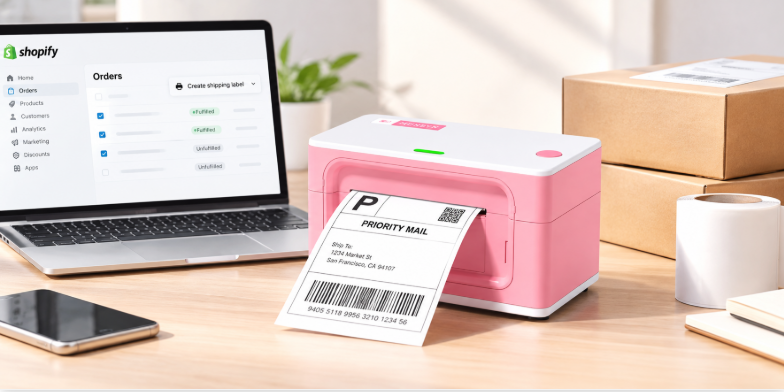
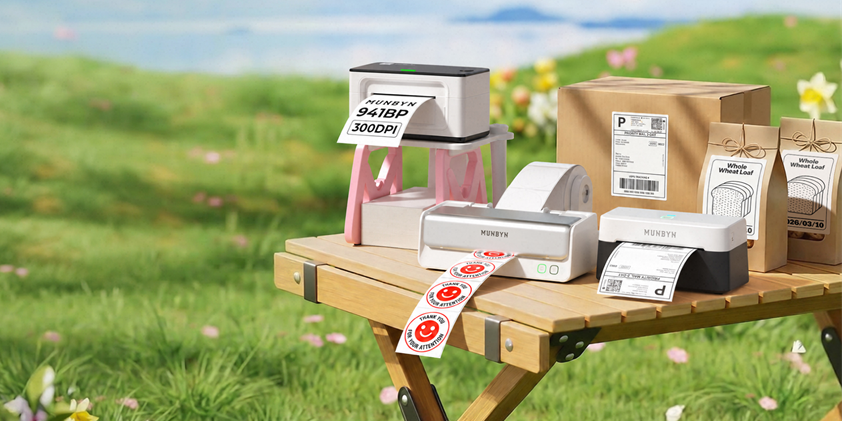
Les étiquettes d'expédition MUNBYN représentent une solution pratique pour les entreprises canadiennes qui cherchent à optimiser leur processus d'expédition. Les imprimantes d'étiquettes thermiques et les fournitures d'étiquettes d'expédition de MUNBYN éliminent le besoin d'ajustements constants de l'imprimante et de problèmes d'alignement. Leurs étiquettes d'expédition thermiques 4x6 sont spécialement conçues pour les spécifications des transporteurs canadiens et nord-américains et s'intègrent parfaitement aux plateformes de vente populaires, notamment eBay.ca, Amazon.ca, Shopify et WooCommerce. (Utilisez le code de réduction à durée limitée "MYSEO" lors du paiement pour bénéficier d'une réduction supplémentaire de 8 %.)
L'avantage des solutions d'étiquetage thermique standardisées est la cohérence et la fiabilité. Lorsque vous imprimez 50 étiquettes par semaine, la capacité de traiter par lots et d'imprimer sans ajustements d'alignement représente un gain de temps réel. L'impression thermique est particulièrement précieuse au Canada car elle produit des codes-barres nets et prêts à être scannés qui fonctionnent de manière fiable dans les installations de tri de Postes Canada et les réseaux des autres transporteurs. De plus, les imprimantes thermiques fonctionnent de manière fiable dans les environnements d'entrepôt froids courants pendant les hivers canadiens, contrairement aux imprimantes à jet d'encre qui peuvent souffrir de problèmes de débit d'encre par temps froid.
Conseils spécifiques aux transporteurs pour la création d'étiquettes d'expédition
Considérations spécifiques à Postes Canada
- Utilisez Postes Canada en ligne pour des tarifs réduits par rapport aux achats au comptoir
- Le code postal doit être correctement formaté (format A1A 1A1) pour un tri efficace
- Le colis accéléré et le courrier prioritaire incluent des délais de livraison garantis
- La confirmation de signature peut être ajoutée pour les articles nécessitant une preuve de livraison
- Une couverture d'assurance est disponible pour les articles de grande valeur
- Des suppléments pour les régions éloignées peuvent s'appliquer pour la livraison dans le Nord canadien
- Postes Canada recommande de placer les étiquettes sur la surface la plus grande et la plus plate
- Le colis ordinaire est le plus économique pour les articles non urgents (2 à 8 jours ouvrables)
Considérations spécifiques à Purolator
- Purolator Ground est compétitif pour l'expédition régionale canadienne
- Express U.S. offre de bons tarifs transfrontaliers vers les États-Unis
- Services internationaux disponibles avec suivi vers les principales destinations mondiales
- Signature à la livraison disponible pour une sécurité supplémentaire sur tous les services
- Purolator a une forte couverture urbaine, mais vérifiez la disponibilité du service pour les zones rurales
- Suivi en temps réel via Purolator.com
- Poids maximal : 68 kg (150 lb) pour les services standard
- Livraison le week-end disponible dans certaines zones métropolitaines
Considérations spécifiques à UPS Canada
- UPS Ground est fiable pour l'expédition transfrontalière vers les États-Unis
- 2nd Day Air et Next Day Air offrent des options plus rapides à des prix compétitifs
- Calculs automatiques des droits de douane et des taxes pour les envois transfrontaliers
- Capacités de suivi avancées avec preuve de livraison
- Points de service UPS Store disponibles pour l'impression d'étiquettes et le dépôt de colis
- Les comptes en ligne offrent des remises importantes par rapport aux tarifs au comptoir
- Excellent service vers les principales zones métropolitaines américaines
Considérations spécifiques à FedEx Canada
- FedEx Ground est économique pour l'expédition intérieure canadienne
- Express Overnight garantit la livraison le jour ouvrable suivant dans la plupart des villes canadiennes
- Options International Express disponibles avec support de dédouanement
- Expédition à température contrôlée disponible pour les articles sensibles
- Délais de livraison garantis avec compensation en cas de retard
- Points de service FedEx Office disponibles pour les services d'étiquetage
- Suivi en temps réel avec options de signature
Erreurs courantes à éviter
Même les expéditeurs expérimentés commettent des erreurs. Voici ce qu'il faut surveiller :
- Formatage incorrect du code postal : Les codes postaux canadiens doivent être formatés comme A1A 1A1 avec un espacement approprié
- Abréviation de province manquante : Incluez toujours le code de province à 2 lettres (ON, BC, AB, etc.)
- Adresses incomplètes : Incluez toujours les numéros d'appartement/unité et les détails de la rue ; les informations manquantes entraînent des retards
- Niveau de service incorrect : Sélectionner un colis ordinaire au lieu d'un colis prioritaire ou accéléré peut décevoir les clients qui s'attendent à une livraison plus rapide
- Codes-barres illisibles : Vérifiez toujours que les codes-barres imprimés scannent correctement avant de remettre les colis
- Dépassement des restrictions de poids/taille : Chaque service a des limites ; les colis surdimensionnés entraînent des suppléments ou un refus
- Confirmation de signature manquante : Les articles de grande valeur doivent inclure une signature requise pour éviter la perte ou le vol
- Mauvais placement de l'étiquette : Les étiquettes recouvertes de ruban adhésif ou placées sur les bords ne seront pas scannées dans les centres de tri
- Erreurs de TPS/TVH : Si vous êtes inscrit à la TPS/TVH, assurez-vous que les détails de votre entreprise sont exacts
- Formatage d'adresse incohérent : Utilisez des mots complets (Rue, Avenue, Boulevard) au lieu d'abréviations lorsque cela est possible
- Problèmes d'impression en hiver : Les étiquettes imprimées à jet d'encre peuvent devenir cassantes ou illisibles par temps froid ; utilisez des imprimantes thermiques
Intégration avec votre plateforme de vente
La plupart des vendeurs en ligne canadiens bénéficient de l'automatisation :
- eBay.ca : S'intègre à Postes Canada pour des tarifs réduits ; génère des étiquettes directement à partir des commandes
- Amazon.ca : Propose Fulfilled by Amazon, ou Fulfilled by Merchant avec diverses options d'expédition
- Shopify : Des applications tierces comme Shippo, Shipstation ou des solutions spécifiques au Canada gèrent la création d'étiquettes
- WooCommerce : Des plugins d'intégration se connectent à Postes Canada, Purolator et UPS Canada
- Etsy.ca : S'intègre à Postes Canada pour une création d'étiquettes rationalisée
- Votre propre site web : Des outils tiers comme Shippo ou Postes Canada s'intègrent directement
Ces intégrations récupèrent automatiquement les données des clients, réduisant les erreurs de saisie manuelle et accélérant considérablement l'exécution.
Expédition transfrontalière vers les États-Unis
De nombreux vendeurs canadiens expédient vers les États-Unis. Des considérations supplémentaires incluent :
- Déclaration en douane : Obligatoire pour tous les articles traversant la frontière Canada-ÉtatsUnis
- Codes SH : Codes du Système harmonisé nécessaires à des fins douanières
- Droits de douane et taxes : Clarifier si le destinataire ou l'expéditeur paie (généralement le destinataire)
- Articles restreints : Certains articles ne peuvent pas être expédiés aux États-Unis ; vérifiez les restrictions du transporteur
- Délais de livraison : Prévoir un délai supplémentaire pour le traitement douanier (généralement 1 à 3 jours ouvrables)
- Assurance : Envisager une assurance supplémentaire pour les envois transfrontaliers
- Options de transporteur : UPS et Purolator sont souvent compétitifs pour les expéditions transfrontalières
- Formulaires : Un formulaire douanier américain peut être requis (certains transporteurs le fournissent par voie électronique)
Considérations météorologiques et saisonnières
Le climat canadien présente des défis d'expédition uniques :
- Retards hivernaux : Les fortes chutes de neige, la glace et le froid extrême peuvent retarder la livraison, en particulier dans les provinces des Prairies et les régions du Nord.
- Durabilité des étiquettes : Assurez-vous que les étiquettes restent lisibles par temps de gel ; l'impression thermique est plus fiable que l'impression à jet d'encre.
- Conditions d'entrepôt : Les entrepôts canadiens sont souvent froids ; les imprimantes thermiques fonctionnent de manière fiable dans les environnements froids.
- Demande saisonnière : La période des fêtes (novembre-décembre) connaît une augmentation des volumes d'expédition et des retards potentiels.
- Conditions estivales : La chaleur et l'humidité en été peuvent affecter les adhésifs des étiquettes ; utilisez des étiquettes de qualité.
- Variations régionales : Les régions arctiques et du Nord peuvent avoir une disponibilité de service limitée ; planifiez en conséquence.
- Transitions printemps/automne : Les conditions météorologiques variables peuvent affecter les horaires de livraison.
Considérations régionales pour l'expédition au Canada
- Zones métropolitaines : Meilleure couverture de service et livraison plus rapide (Toronto, Vancouver, Calgary, Montréal)
- Zones éloignées : Les communautés du Nord peuvent avoir des options de transporteur limitées et des délais de livraison prolongés.
- Provinces de l'Atlantique : La Nouvelle-Écosse, le Nouveau-Brunswick, l'Île-du-Prince-Édouard et Terre-Neuve peuvent avoir des délais de livraison légèrement plus longs.
- Provinces des Prairies : Les grandes distances géographiques affectent les délais de livraison ; prévoyez un délai supplémentaire.
- Territoires du Nord : Le Yukon, les Territoires du Nord-Ouest et le Nunavut ont des transporteurs limités et des délais prolongés.
- Communautés des Premières Nations : Certaines communautés ont un accès restreint ; vérifiez avant d'expédier.
Réflexions finales : Simplifier la création d'étiquettes d'expédition
Savoir comment créer une étiquette d'expédition est non négociable pour les vendeurs en ligne canadiens. Que vous créiez une étiquette ou cent, les principes fondamentaux restent les mêmes : informations précises, formatage correct, impression lisible et placement correct.
Pour les vendeurs traitant un volume important, il est judicieux d'opter pour des solutions d'étiquetage dédiées. Le temps gagné, combiné à une qualité d'impression et une fiabilité améliorées (particulièrement importantes pendant les hivers canadiens), s'amortit souvent rapidement. Les systèmes conçus spécifiquement pour l'expédition, comme les solutions d'étiquettes thermiques de MUNBYN, éliminent les frictions de votre processus d'exécution et vous aident à maintenir des normes professionnelles cohérentes toute l'année.
Commencez par les outils d'étiquetage de base de votre transporteur pour comprendre le processus. À mesure que votre entreprise se développe, vous vous tournerez naturellement vers des solutions qui automatisent et simplifient le travail. Dans tous les cas, la priorité accordée à l'exactitude des étiquettes d'expédition réduira les problèmes, améliorera la satisfaction des clients et protégera votre réputation en tant que vendeur partout au Canada.
Partager:
Meilleures imprimantes d'étiquettes alimentaires pour cuisines commerciales
What Is a Thermal Label Printer? How It Works & What You Need to Know